
My adult life has taken a path my 18-year-old self could never have imagined. From the outside, it looks neat and linear: a confused teenager becomes an academic with a doctorate, now running a master’s programme in business and innovation. It looks like progress. It looks like a ladder climbed rung by rung.
But life is not a ladder. And there is no winning.
There is only discovery, experience, empathy, and learning. There is the slow and often uncomfortable work of looking inward to understand who we are, where our limits lie, and how we came to be this way. It is a search for purpose and identity. It is learning how to live in a complex, fractured world while also facing our own trauma, insecurities, contradictions, and so-called weirdness.
Art schools understand this. Art schools teach this.
In contrast, the dominant language of education today reflects my more recent academic and professional world: innovation, entrepreneurship, business, digital transformation. These ideas matter. We live in a fast-changing, digitally driven world that demands adaptability and continual learning. Many of us feel like we are permanently jogging, slightly out of breath, never quite catching up.
That constant motion creates a deep sense of restlessness. It is fuelled by technological acceleration, political instability, economic pressure, and a human desire for certainty in uncertain times. As these buzzwords move to the centre of education, institutions rush to prepare students for an unknown future. Everyone jumps on board, often without knowing exactly where the train is going.
And in that rush, something vital is being pushed to the margins.
Art schools take many forms: fine arts, performance, writing, music, dance. They have always been niche. They have always struggled financially. They have rarely fitted neatly into economic or productivity-driven models. Yet they play a profoundly important role in society. Increasingly, that role is being questioned, diminished, or forced to reshape itself to fit frameworks that do not align with its core purpose.
I spent the first twenty years of my career immersed in the art world before stepping well outside my comfort zone and into business through an executive MBA. That experience cracked my brain open. I learned new ways of thinking and became acutely aware of how different art education is from most other disciplines. This was not only through the MBA itself, but through conversations with colleagues from law, marketing, business, engineering, medicine, and governance.
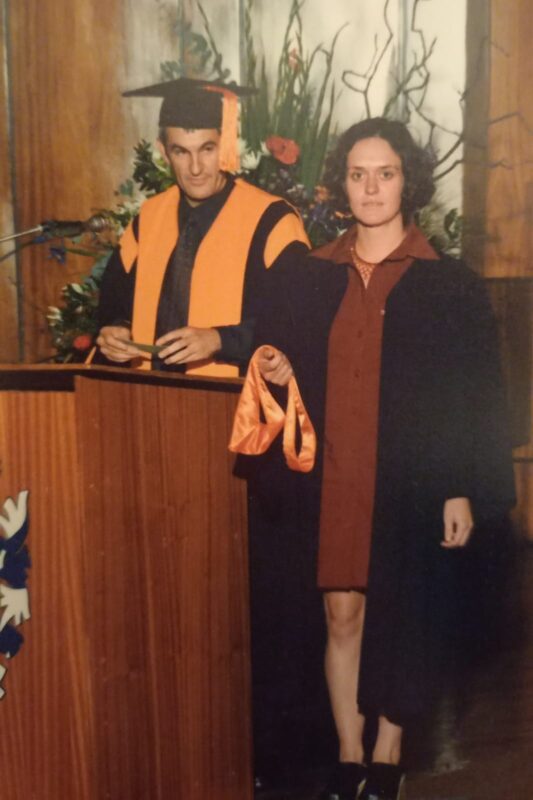
In art schools, it is impossible to hide from yourself. The spotlight is on you and your experience in the world. You cannot disappear behind content, ambition, or technical competence. You are required to engage with who you are and how you stand in the world. Lecturers become mentors. They come to understand their students deeply: their backgrounds, their challenges, their fears. The relationship is emotional, not transactional.
I do not want to idealise art schools. There are real reasons I chose to move into business. I grew tired of an environment that often resisted strategy, growth, and ambition. I wanted a different challenge. But the foundation art school gave me was critical. It shaped how I think, how I question, and how I understand myself and the world.
Art schools are fundamentally different from many other faculties. They are not driven by scale, rankings, or visibility. Many arts lecturers are not on social media and have little interest in self-promotion. They stand for something else. They focus on truth: their own, and the truth their students are trying to find. They resist turning what they do into a marketing exercise.
Art schools are not just places where skills are taught. They are spaces where people learn how to think, how to question, how to sit with ambiguity, and how to understand themselves in relation to others. They cultivate critical reflection, emotional intelligence, cultural awareness, and the courage to explore ideas that do not yet have a market, a metric, or a business case. Educators carry these values into the structures and logic of education itself.
Ironically, these are exactly the qualities we now claim to need most.
When we try to make art schools more efficient, more profitable, or more aligned with dominant economic narratives, we strip them of what makes them valuable. We lose spaces that allow people to become fully human before they are expected to become productive. We also lose voices within education that remind us there are alternative value systems and alternative ways of measuring success.
Over the last decade, I have listened to arts lecturers describe their struggle to survive in systems increasingly driven by data, metrics, and quantitative outputs rather than purpose and meaning. I hear these stories while I still work as a visual artist in my studio, yet also operate in the punchy, popular world of business and innovation. This is not a battle they can win on those terms. They cannot easily quantify why what they do matters when their student numbers are low, their structures deliberately resist efficiency, and their LinkedIn posts do not attract attention.
And so there is a growing fear that art schools will simply disappear while the rest of us keep jogging, never quite reaching a destination.
My way of thinking, my approach to life, and my understanding of the world are rooted in my early art school education. That is where I developed depth, perspective, and philosophical grounding.
We need this. Universities need this. Society needs this.

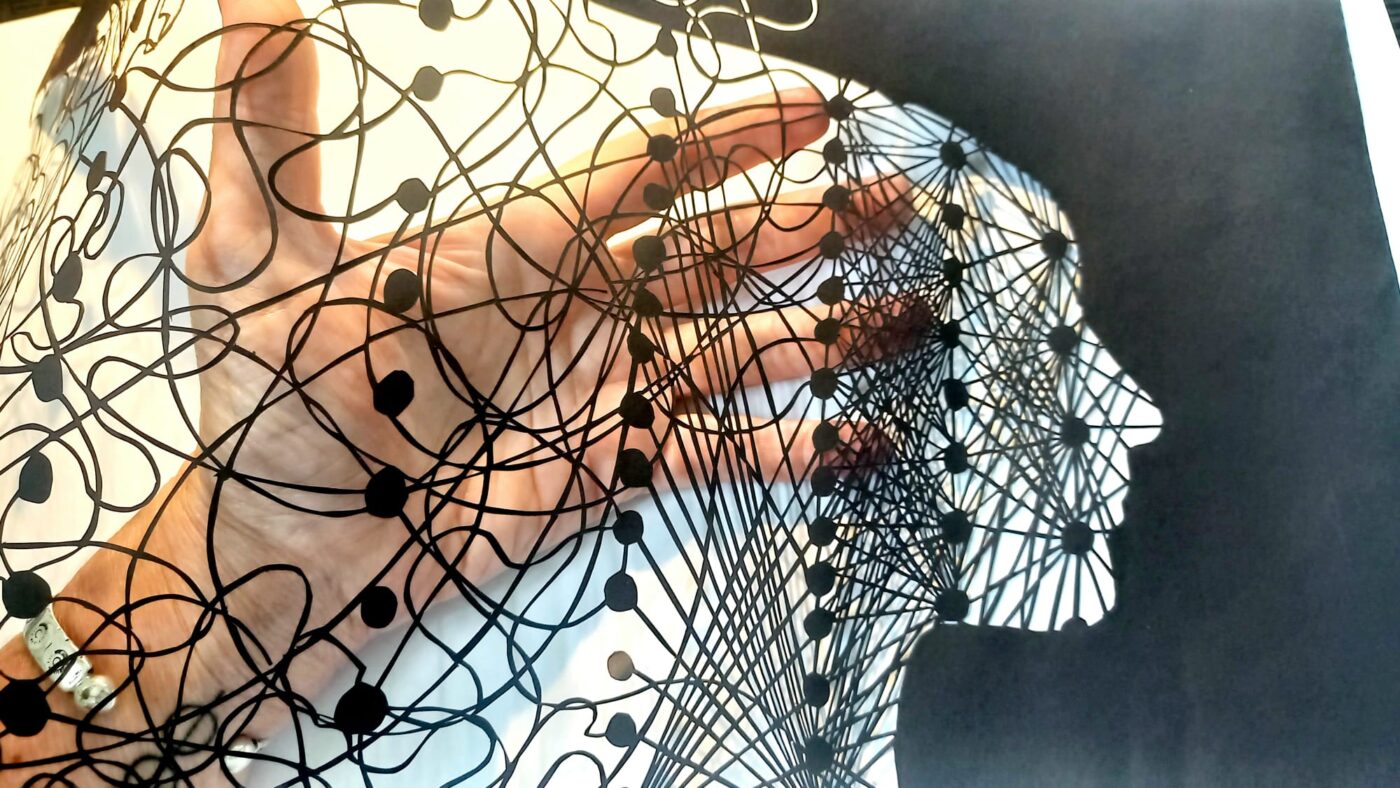
We must protect art schools not just in words, but in action. Let them keep their informal structures and messy studios. Let them have low intake numbers and high lecturer-student contact. Let them influence business, innovation, and entrepreneurship, and remind us why we are doing any of this in the first place.
Growth is not always good. Quantitative measures are not always the best indicators of value or success.
Losing art schools and the way they function would not just be a loss for artists.
It would be a loss for all of us.
