The final step in gaining a PhD is an oral defense where you have one hour to present your research and answer any questions the reviewers of your research may have. The oral defense is a closed defense in South Africa, meaning people cannot join the session. However, I think it is a great and quick summary to the research for people to see if the topics are on interest to them. In this blog I will share both a video talking through the PowerPoint presentation (25 minutes), as well as a written blog outlining the main slides (full PowerPoint presentation at the end of the blog). I am available if anyone has questions. Researchers, and students doing research on this topic – I am always open to sharing my views if it helps you – please contact me on hello@m9art.co.za.
1. Motivation in doing this research
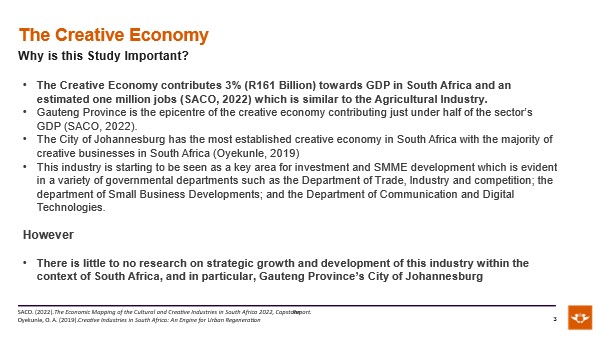
After two and a half decades of working in various capacities within the Cultural and Creative Industries (CCIs), I set out to deepen my understanding of this sector and drive research within the City of Johannesburg. My goal is to provide a foundation for future studies and to offer local government valuable insights for policy development aimed at fostering industry growth. This research is designed to be practical rather than purely academic.
Much of my knowledge has been shaped through experience and numerous workshops, navigating an industry that is both complex and often misunderstood. Many fail to recognize the underlying structures and systems that shape the CCIs. I hope this research sheds light on both their dynamism and their systemic nature.
Systems thinking has been a crucial tool in analyzing these dynamics, helping to clarify implementation strategies, roles, and responsibilities. It also highlights the multi-layered impact of CCIs on local economic development, entrepreneurship, and the achievement of sustainable development goals.
2. Literature Review
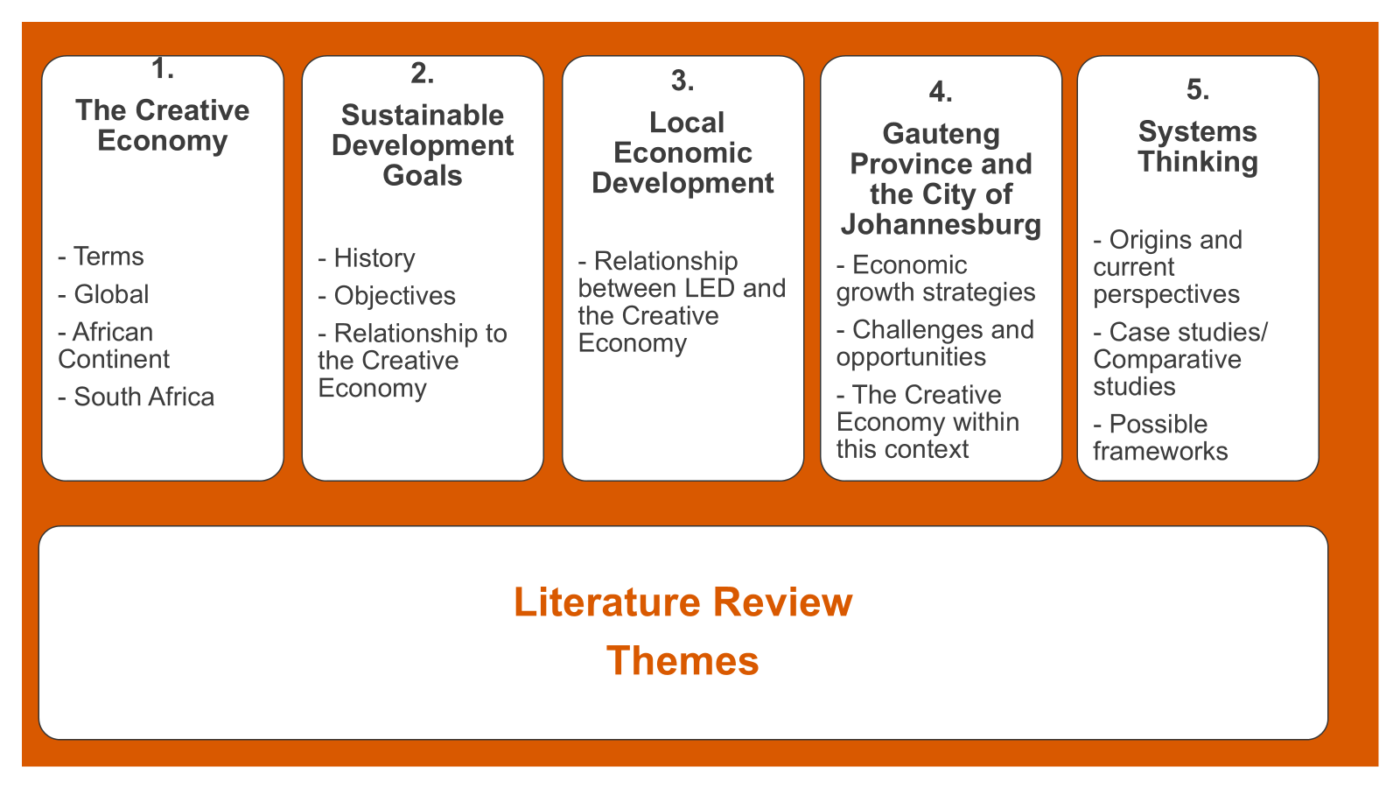
The literature review is structured around five key themes: the creative economy, the Sustainable Development Goals, local economic development (including creative cities), Gauteng Province and the City of Johannesburg, and systems thinking. Through this review, the complexity of the Cultural and Creative Industries is examined, along with their impact across various dimensions at the city, provincial, and national levels.
3. Research Methodology

The research methodology follows a structured, multi-layered approach grounded in a social constructivist and humanist constructivist paradigm. Using abductive reasoning, the study employs a mixed-method convergent design, integrating qualitative and quantitative research methods. The strategy includes two case studies (qualitative), one questionnaire (quantitative), and a mapping study to ensure a comprehensive understanding of the Cultural and Creative Industries in Johannesburg. A cross-sectional time horizon is applied, capturing data at a specific point in time. Finally, data collection and analysis techniques are employed to interpret the findings, ensuring a balanced and systematic approach to investigating the industry’s complexities.
4. Objectives and Relationship to Research

The research is structured around four key secondary objectives, each using distinct methodologies. First, a mapping exercise is conducted using desktop and primary research to identify and analyze creative organizations and tertiary institutions within Johannesburg. Second, a primary quantitative survey gathers insights from creative economy practitioners on their perceptions of the industry and its growth. Third, primary qualitative research explores the systems thinking approach through two case studies: Open Studios Johannesburg and the integration of creative entrepreneurship studies at a tertiary institution. Finally, an analysis and interpretation of previous findings lead to the development of a systems thinking visual framework/s, offering a structured way to navigate the industry’s complexity and decentralization.
5. Primary Research
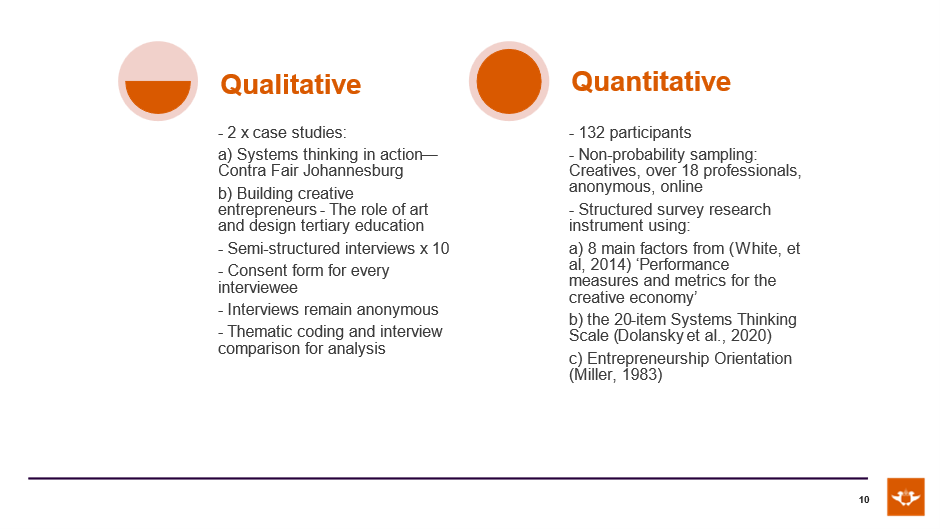
The primary research employs a mixed-method approach, integrating both qualitative and quantitative methodologies. The qualitative research consists of two case studies: Systems Thinking in Action at Contra Fair Johannesburg and Building Creative Entrepreneurs the role of art and design tertiary institutions. Data was collected through 10 semi-structured interviews, with strict anonymity and consent protocols, and analyzed using thematic coding and interview comparisons. The quantitative research involves a structured survey with 132 participants, using a non-probability sampling method targeting creatives and professionals over 18. The survey incorporates three key instruments: Performance Measures and Metrics for the Creative Economy (White et al., 2014), the 20-item Systems Thinking Scale (Dolansky et al., 2020), and Entrepreneurship Orientation (Miller, 1983). This mixed-method approach provides both in-depth qualitative insights and measurable quantitative data, strengthening the study’s findings.
6. Initial Findings
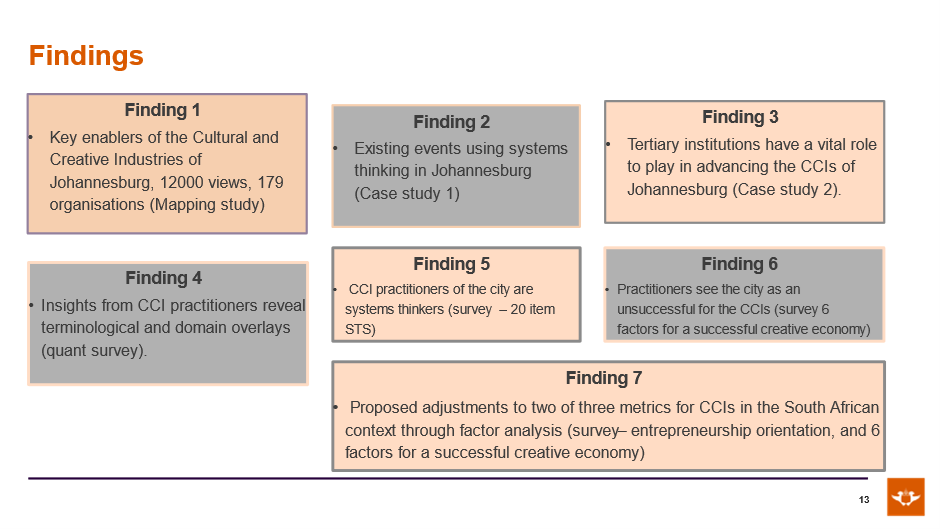
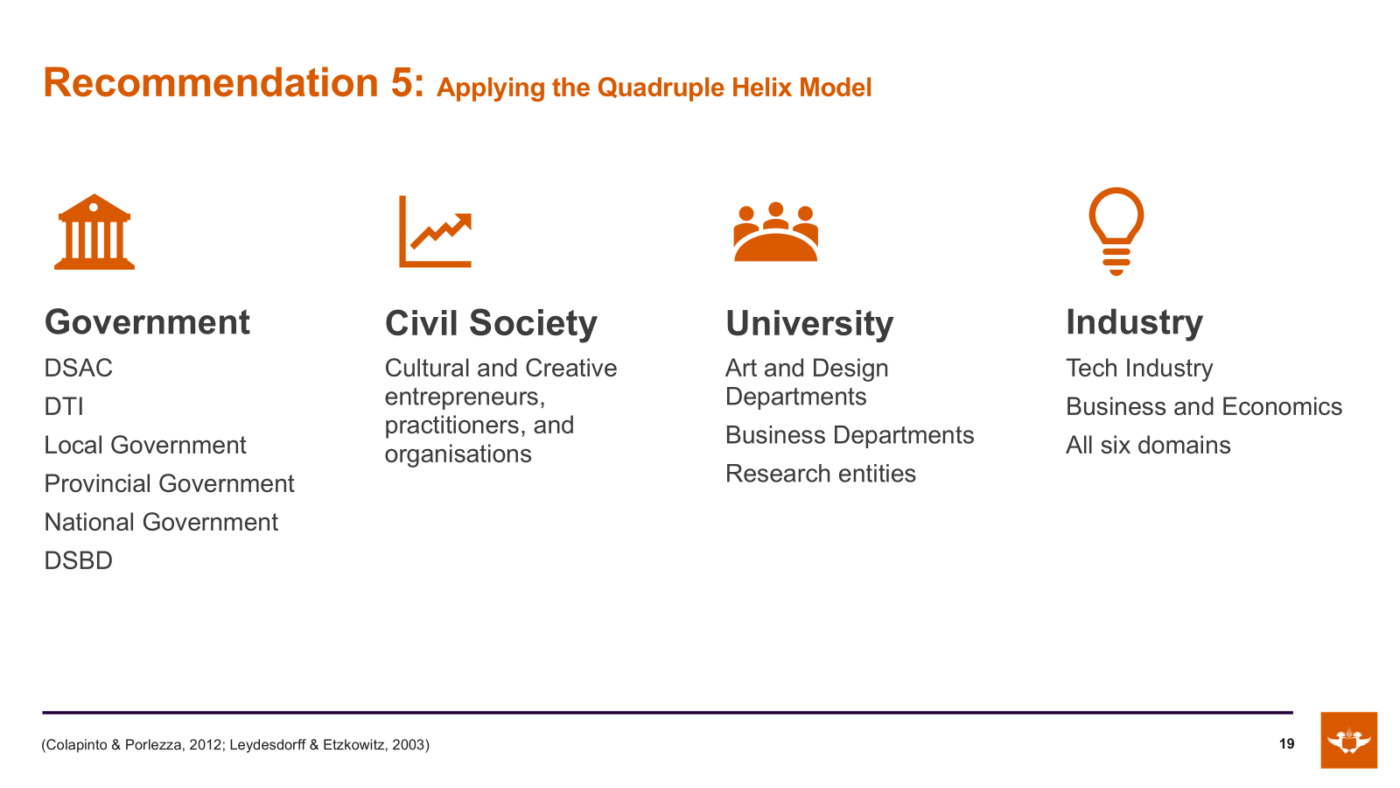
Seven key findings emerged from the primary research conducted. The first finding relates to the mapping study, which was conducted using open-source research. The resulting map has been viewed over 12,000 times and includes 179 enabling organizations. It features eight categories that creative practitioners in Johannesburg could contribute to, providing insights into the organizations they perceive as supporting the growth of the creative economy. The second finding is based on a case study of Contra Fair Johannesburg, which explored how the event applied systems thinking in both its conceptualization and implementation. The third finding stems from a case study that involved interviews with key stakeholders to examine the potential role of art and design tertiary institutions. The study found that their role extends beyond simply teaching entrepreneurship within art and design departments; they also serve as crucial facilitators within the quadruple helix model, engaging government, industry, academia, and civil society. The fourth to seventh findings are drawn from the quantitative survey. The fourth finding highlights significant overlaps in both sectors and work modalities among cultural and creative professionals, who often engage in gig work, part-time employment, self-employment, and freelancing across multiple domains. The fifth finding reveals that cultural and creative practitioners inherently think in systems. The sixth finding indicates that CCI professionals do not perceive the City of Johannesburg as a successful hub for the creative economy. Lastly, the seventh finding proposes adjustments to existing performance metrics—specifically, Performance Measures and Metrics for the Creative Economy (White et al., 2014) and Entrepreneurial Orientation (Miller, 1983)—to better reflect Johannesburg’s creative and cultural industries.
7. Objective 4: To Develop a Systems Thinking Visual Framework/s that Proposes a Way Forward for the Industry’s Complexity
Please watch the video to listen through the recommendations. Below is an overview of the slides:
7.1 Recommendation 1: Understanding Stakeholders
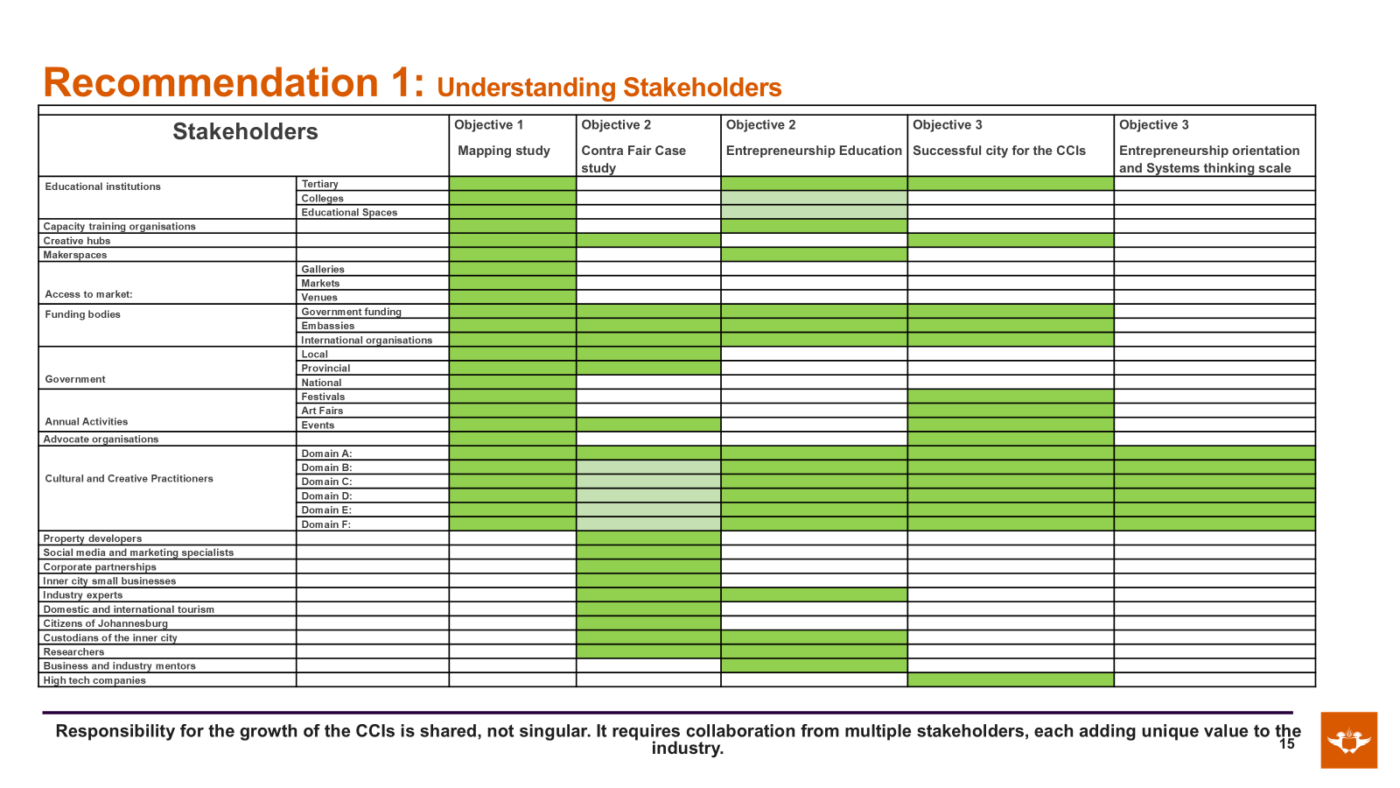
7.2 Recommendation 2: Bold, Collaborative, and Transformative Leadership
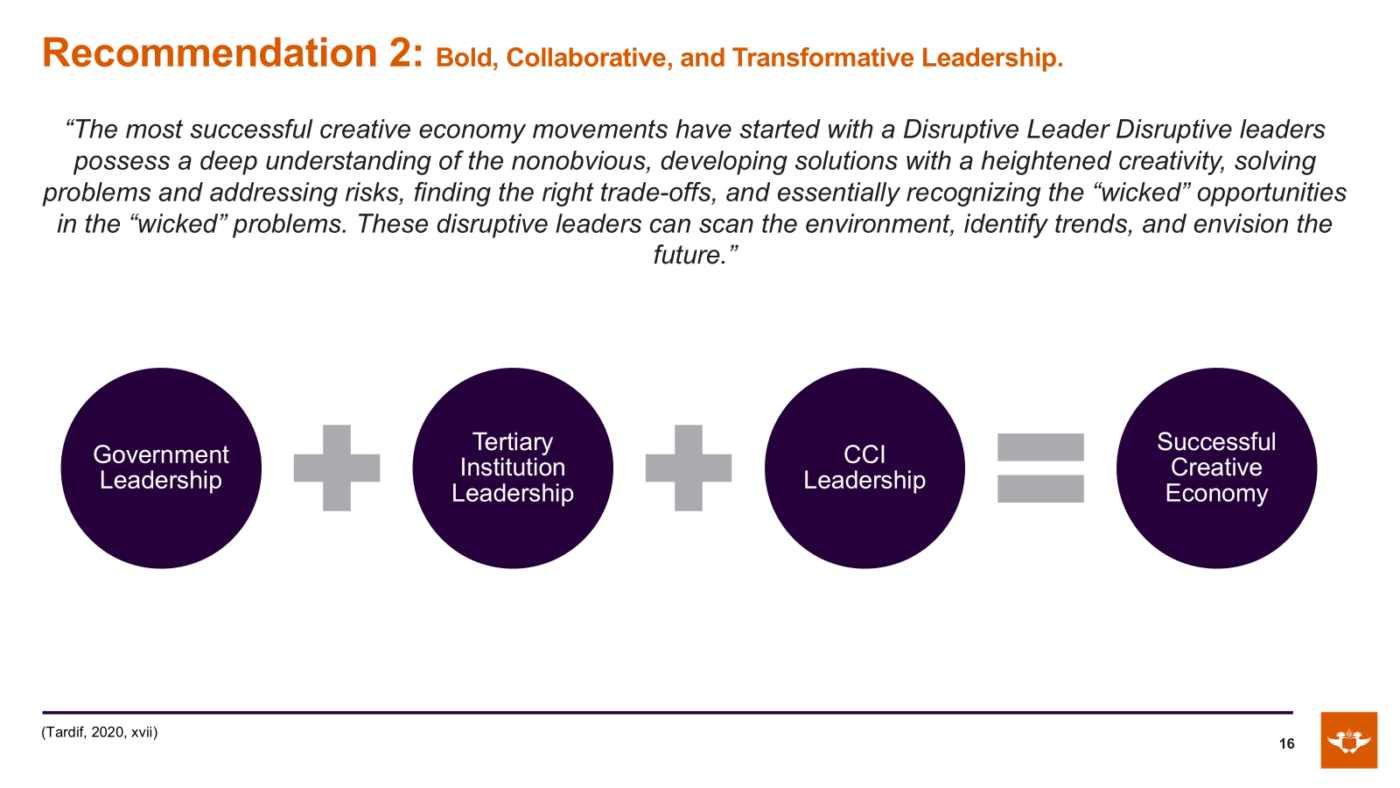
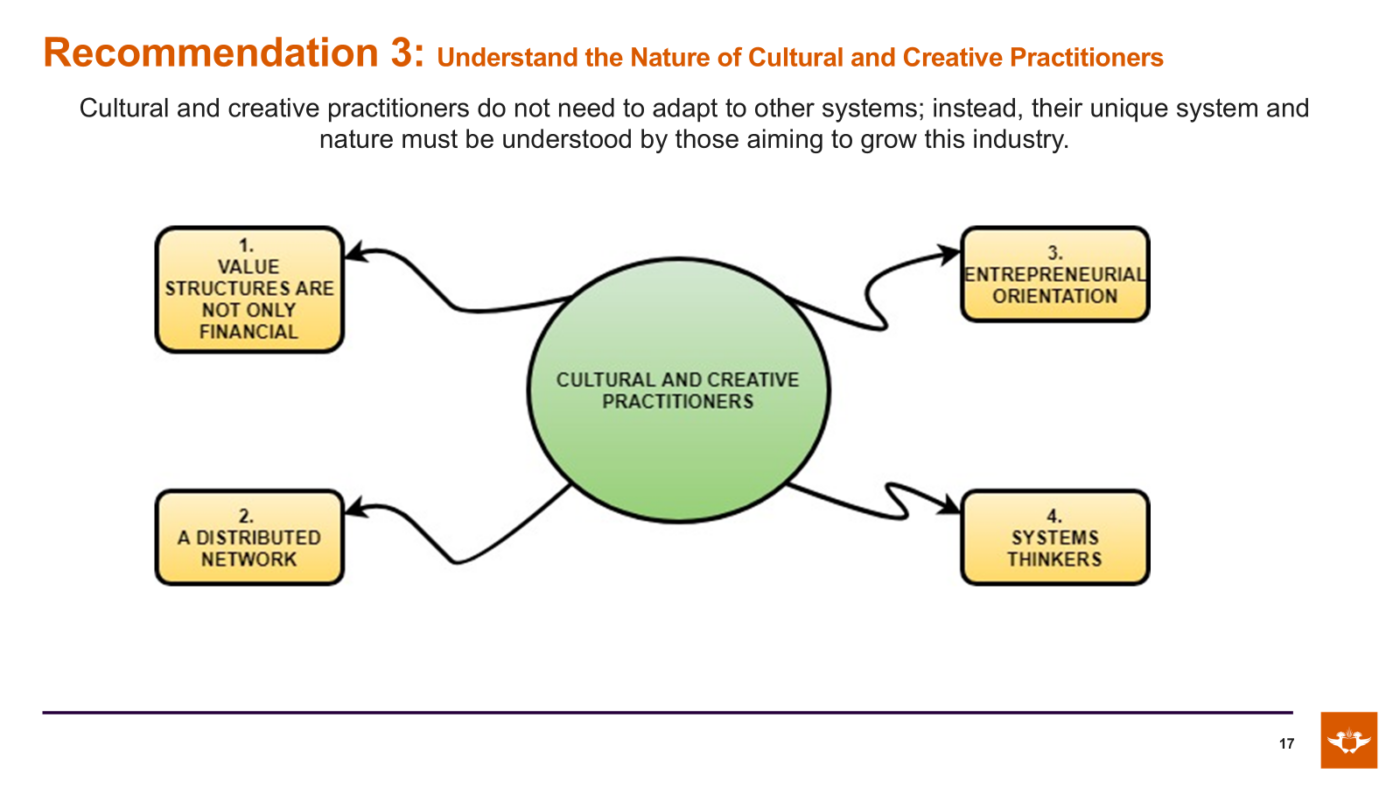
7.3 Recommendation 3: Understanding the Nature of Cultural and Creative Practitioners
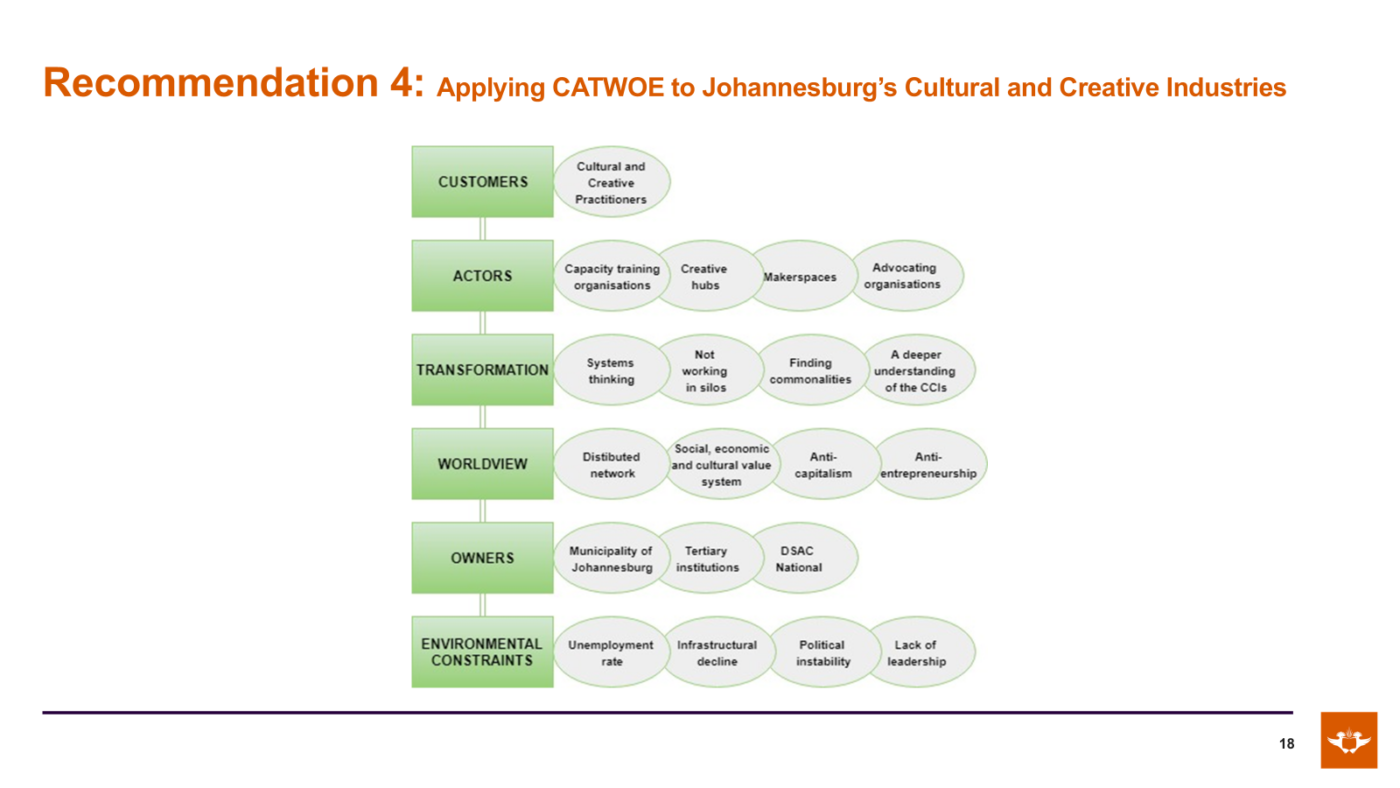
7.4 Recommendation 4: Applying CATWOE to Johannesburg’s Cultural and Creative Industries
7.5 Recommendation 5: Applying the Quadruple Helix Model
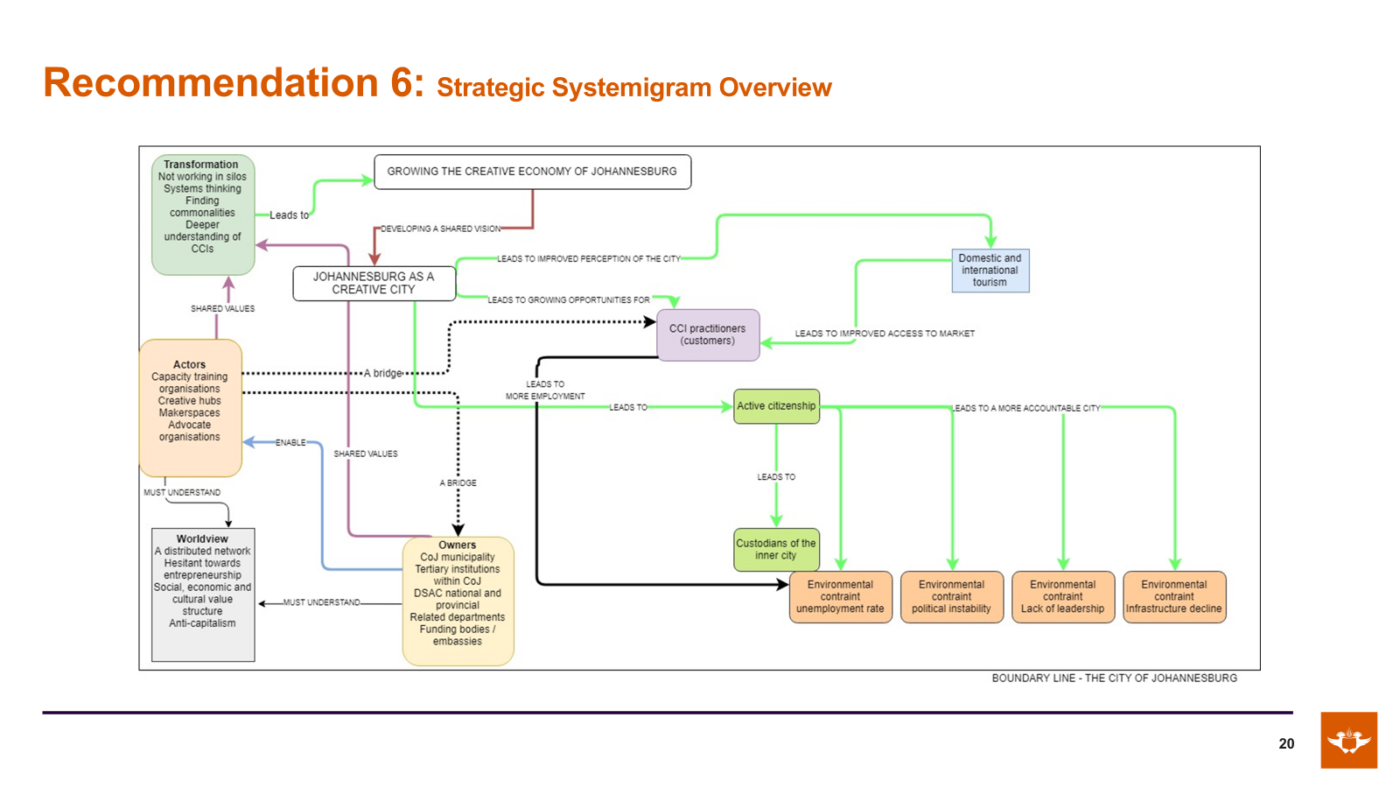
7.6 Recommendation 6: Strategic Systemigram Overview
Vivo Presentation
You’re welcome to download the PowerPoint presentation if you’re interested. If you have any questions about either (a) the City of Johannesburg’s Cultural and Creative Industries or (b) the PhD Viva Voce process, feel free to reach out to me at hello@m9art.co.za.
